Double Layer Greenhouse Plastic: Is It Worth It?

April 14, 2026

Quick Decision Guide

If you heat at night for weeks at a time, double layer is usually worth serious consideration. If you rarely heat, single layer often wins on simplicity and upfront cost.

Choose DOUBLE layer if…

  • You heat the greenhouse regularly (especially nights in fall/winter/early spring).
  • You want steadier temps to reduce plant stress and improve growth consistency.
  • Your structure can support inflation hardware and the extra film layer.
  • You're replacing film anyway and want a measurable operating-cost upgrade.

Choose SINGLE layer if…

  • You rarely heat, or heating is limited to freeze protection only.
  • You're in a mild climate where night heat loss is a smaller cost driver.
  • Your priority is lowest upfront cost and simplest installation.

What double layer greenhouse plastic is

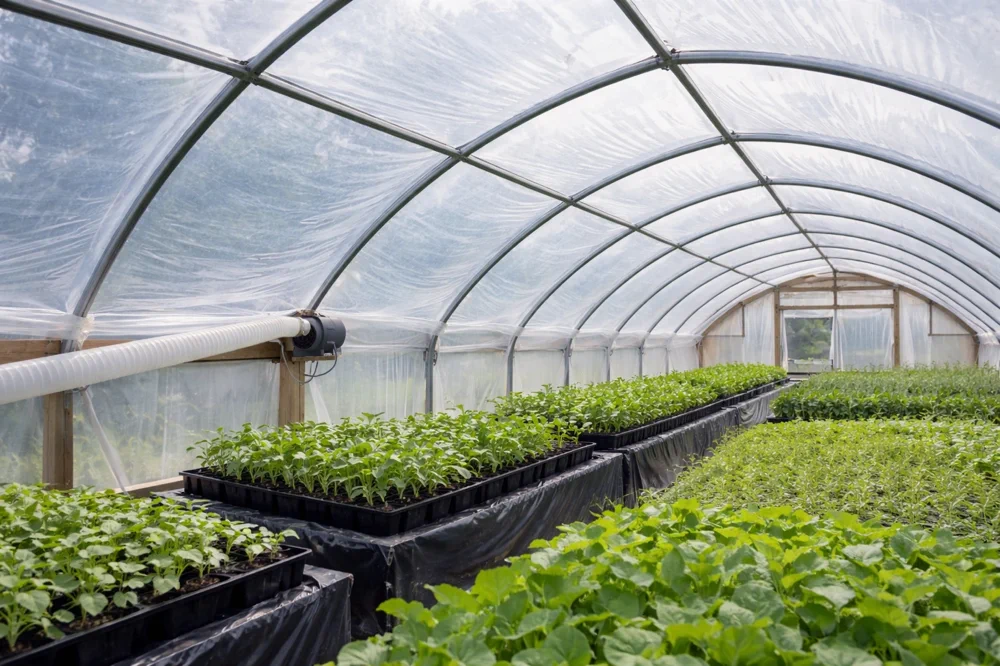
Double-layer greenhouse plastic interior showing inflated air gap between outer and inner film layers along structural ribs
Inflated double-layer greenhouse plastic creates a visible air gap that acts as insulation, reducing nighttime heat loss.

"Double layer" means two sheets of greenhouse poly film installed over the same structure, with an inflation fan keeping a small, consistent air gap between them. That air pocket acts like insulation—similar to how double-pane windows work—without blocking the sunlight your crops need.

Most growers install double layer when they're already due for a re-cover and want a measurable performance upgrade: fewer temperature swings, better frost protection, and lower heating demand in the shoulder seasons.

How the inflated air gap reduces heat loss

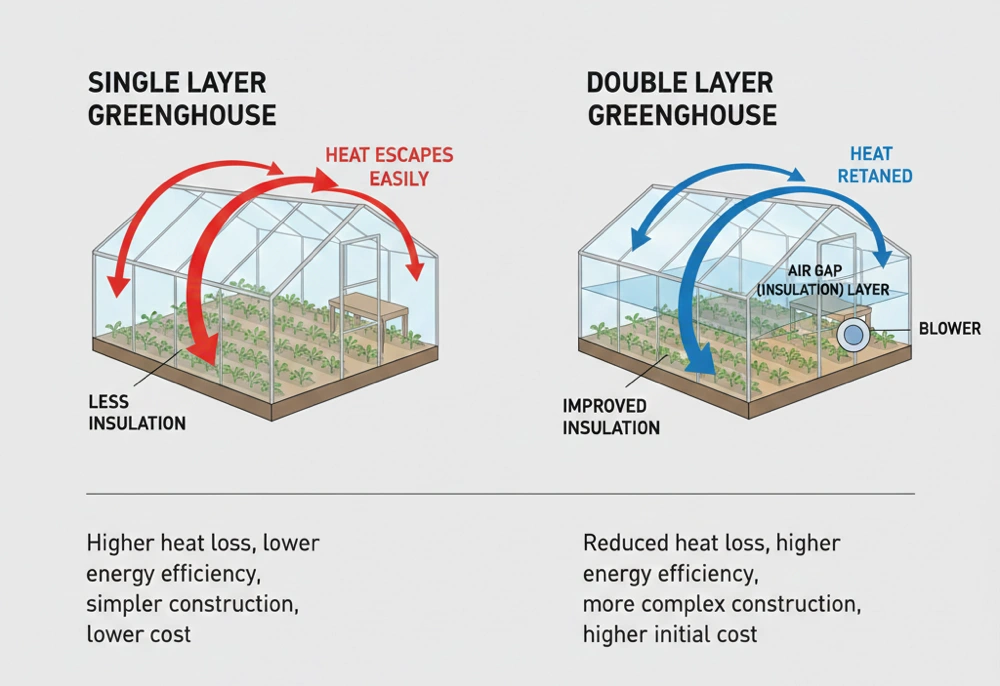
Diagram comparing heat loss from single-layer greenhouse film versus inflated double-layer film with an air gap
Single layer loses heat faster; a double layer with an inflated air gap slows heat transfer and helps stabilize temperature.

On cold nights, a greenhouse loses heat fast through the skin of the structure. A single sheet of poly has minimal insulating value, so the warm interior air "pushes" heat outward.

With double layer, the inflation system traps a layer of still air between the films. Still air is a poor conductor of heat, so the rate of heat transfer drops. In real-world terms, your heater cycles less often to maintain the same setpoint.

Important: the upgrade only performs well if the structure is reasonably tight. Big leaks at end walls, doors, or ground-to-film edges can dominate heat loss and reduce the value of the second layer.
What you actually get: benefits you'll notice

  • Lower heating demand at night (often the biggest economic win for heated houses).
  • More stable temperatures, which can reduce plant stress and improve growth consistency.
  • Better frost buffering during shoulder seasons when nights dip below target.
  • Less condensation drip in many setups (varies by film type, ventilation, and management).
  • Reduced "hot/cold spots" when paired with good airflow and sealing.

Need Help Choosing Film Specs for Your Greenhouse?

Tell us your structure size, climate, and whether you heat at night. We'll recommend a film setup that matches your goals (and your budget).

  • Fast sizing + thickness recommendation
  • Double-layer and inflation kit options
  • Commercial orders welcome

Downsides and when it's not worth it

  • Higher upfront cost for the extra film plus inflation hardware.
  • More complexity (fans, inflation tubes, and details that must be installed correctly).
  • Diminishing returns in mild climates if you rarely heat.
  • Performance depends on sealing; if the house leaks heavily, fix that first.

If your greenhouse is unheated or heated only a few nights per year, the payback may be slow. In that case, investing in sealing, end-wall improvements, or a better ventilation plan can be a more cost-effective first move.

How much heating cost can double layer save?

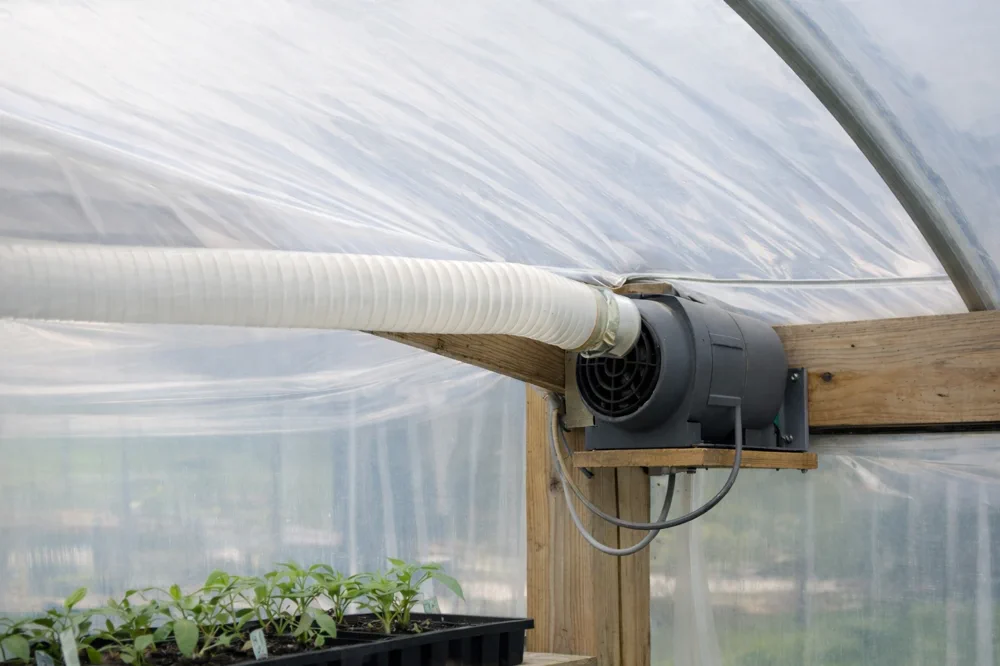
Inflation blower maintaining air pressure between two layers of greenhouse plastic in a commercial hoop house
A small inflation blower keeps air pressure steady between the two plastic layers, improving insulation and reducing heat loss.

There isn’t one universal savings number. Fuel cost, wind exposure, thermostat settings, and air leaks all have a big impact. But double layer usually makes the most difference in heated houses that run often at night.

The blower matters because the air gap only works when inflation stays steady. A simple example calculation below can help you estimate whether the upgrade is likely to pay back in your conditions.

Simple example calculation

Example assumptions

Structure: 30' × 96' heated hoop house (≈ 2,880 sq ft footprint)

Heating season: 120 heated nights/season at about 10 hours/night

Fuel cost: $1.50 per gallon propane equivalent (adjust to your fuel)

Savings range: Double layer often cuts heating energy use by about 20–35%, depending on leaks, wind, thermostat band, and end walls.

Simple example payback calculation
Step Example Notes
Baseline seasonal heating cost (example) $2,400 Your number may be higher/lower
Estimated savings at 25% $600 0.25 × $2,400
Incremental upgrade cost (film + inflation hardware) $900 example ballpark
Payback (example) ≈ 1.5 seasons $900 ÷ $600

One-line payback: In a heated house, double layer commonly pays back in about 1–3 seasons, depending on climate, fuel cost, and how tight the structure is.

Payback by climate

Buying checklist: specs to confirm before you order

  • Structure type + dimensions: hoop house vs gutter-connected; length, width, and peak height.
  • Heating plan: unheated, freeze-protection only, or fully heated nights.
  • Wind exposure: exposed sites benefit from better sealing and robust fastening details.
  • Film strategy: clear vs diffused, and whether you want IR/AC (IRAC) performance benefits.
  • Inflation kit compatibility: fan capacity, tubing layout, and where power will come from.

Installation notes (high level)

Double layer requires an inflation fan and tubing that keeps the air gap consistent. The goal is a smooth, inflated surface with minimal flapping. Spend extra effort on end walls and edge sealing—leaks can erase a big chunk of the heating advantage.

Get pricing for double layer film

Share your greenhouse size and your target season. We'll quote the right film + inflation hardware and include volume pricing options.

  • Volume pricing available on larger orders
  • Double-layer film + inflation kit options
  • Cut-to-length for your structure

FAQ

Does double layer reduce light transmission?

Any extra layer can reduce transmission slightly. In practice, many growers accept the tradeoff when heating savings and stability matter more. Your film choice (clear vs diffused) also affects perceived light quality.

Do I need an inflation fan?

Yes. The air gap is the "insulation." Without stable inflation, performance drops and flapping increases wear.

Is double layer only for winter?

No. Many growers use it through shoulder seasons to reduce night cycling and protect crops during cold snaps.