What Is Hoop House Poly Plastic?
Hoop house poly plastic is greenhouse-grade polyethylene film designed for curved frames (high tunnels). Unlike hardware-store plastic, greenhouse film is UV-treated, tensile-tested, and engineered to stay flexible outdoors. When installed correctly, it creates a stable growing environment by blocking wind, retaining heat, and transmitting high levels of usable light.
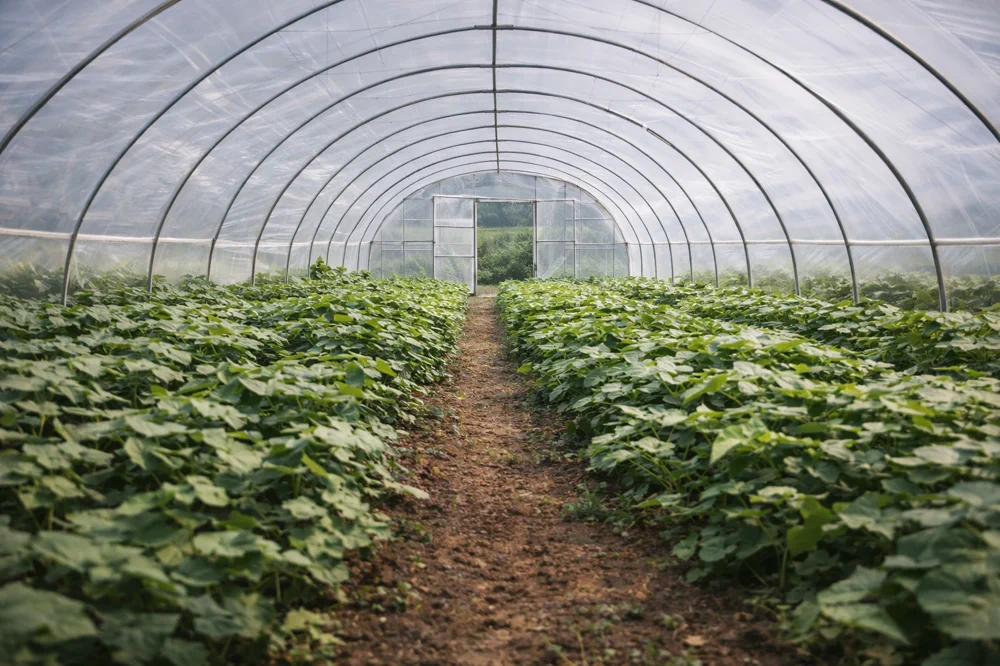
For most growers, the goal is simple: protect crops from wind and cold, extend the season, and keep conditions more consistent day to day. The right greenhouse poly film helps you do that by stabilizing temperatures, reducing nighttime heat loss, and diffusing light more evenly across the crop canopy.
When temperatures swing less, plants experience less stress, growth becomes more uniform, and heating or ventilation systems don’t have to work as hard—helping improve both crop quality and overall efficiency.
Why Growers Choose Poly Film for High Tunnels
Growers use hoop house poly plastic to block wind, trap warmth, and maintain high light transmission—helping extend the growing season and protect crops in unpredictable weather.
Hoop house poly plastic helps by:
- Reducing wind stress and moisture loss
- Holding warmer air overnight and during cold snaps
- Maintaining strong light for growth (clear or diffused options)
Film Types: Clear vs Diffused (and When to Use Each)
Clear film maximizes total light. Diffused film softens intensity, reduces hot spots, and can improve canopy penetration—especially in dense crops.
For most hoop houses, you'll choose between clear and diffused poly film. Both can be excellent—the "best" option depends on your crop, climate, and whether you're prioritizing maximum light or more uniform light distribution.
- Clear poly film: best when you want maximum sunlight (common for winter/low-sun conditions).
- Diffused poly film: best when you want more even light and fewer hot spots (often helpful in bright climates).
- Anti-condensate options: can reduce dripping and help keep the inside surface clearer (airflow still matters).
- Thermal/IR options: designed to slow nighttime heat loss where heating costs or cold nights are a factor.
Choosing Thickness: 6 mil vs 8 mil vs Double Layer
Thickness affects tear resistance and handling during installation, but it's not the only durability factor. In real-world hoop houses, tension, fastening hardware, and abrasion control often matter as much as thickness.
| Option | Best for | What to expect |
|---|---|---|
| 6 mil (single layer) | Most growers / general use | Good balance of durability, flexibility, and cost |
| 8 mil (single layer) | High wind / heavier handling | More puncture & tear resistance; slightly stiffer install |
| Double layer (inflated) | Cold climates / heated houses | Air layer improves insulation; slightly lower light vs single layer |
If you're choosing between single and double layer, think about heat cost and night temperatures. Double poly is most valuable when heating is expensive or nights are consistently cold.
Shop hoop house poly plastic
Get greenhouse-grade poly film cut to length for high tunnels. Choose clear for max light or compare against clear greenhouse film for simple season extension.
- Greenhouse-grade UV treated poly film
- Cut-to-length sizing for your tunnel
- Pairs with lock channel + wiggle wire systems
Installation Tips That Prevent Early Failure
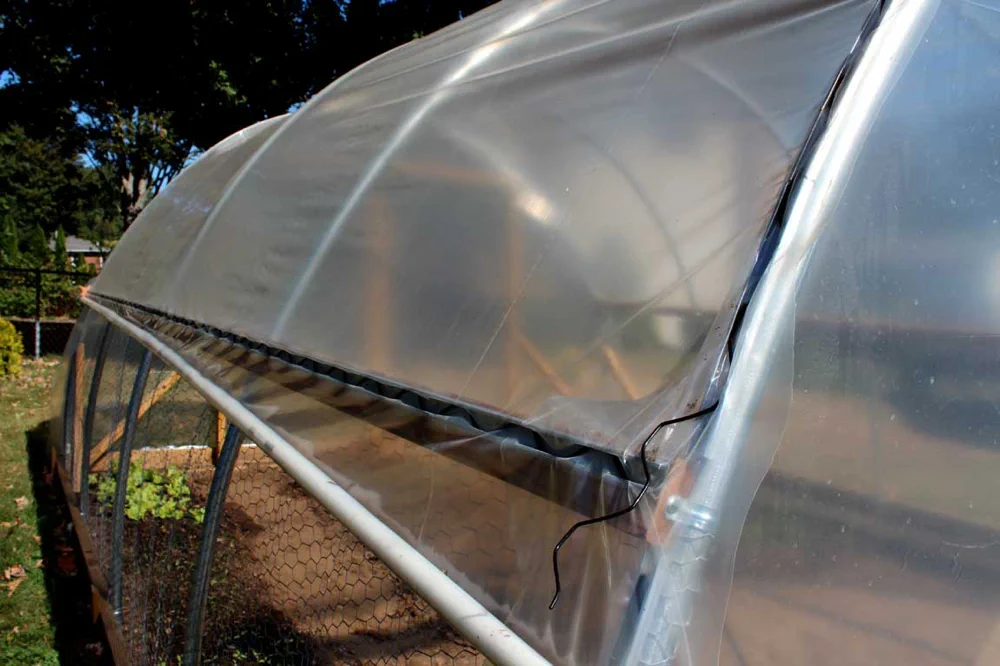
A greenhouse film can be "great on paper" and still fail early if it flaps, rubs, or gets installed under poor conditions. These steps prevent the most common problems:
- Install on a warm, calm day so the film stretches evenly and tightens as it cools.
- Pull evenly from center outward to remove wrinkles and avoid uneven stress.
- Protect abrasion points (sharp edges, bolts, end-wall framing) with tape or padding.
- Use proper fastening hardware for consistent tension (lock channel + wiggle wire works well).
- Re-tension after the first wind event if your system allows it—early slack becomes long-term flapping.
How Poly Plastic Helps Retain Heat
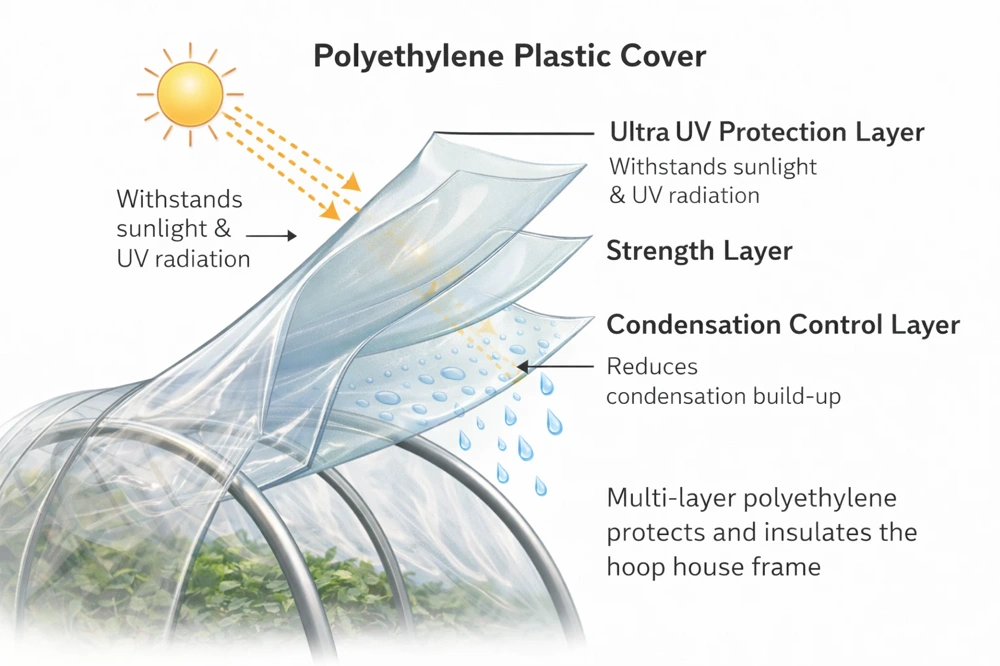
Hoop houses warm up quickly during the day because sunlight passes through the film and heats soil, plants, and benches. At night, heat escapes through the cover and by air leakage. Poly film helps by blocking wind, reducing drafts, and slowing heat loss.
If cold nights are a major issue, consider a double layer inflated system. That trapped air layer is one of the most effective ways to improve insulation in a high tunnel.
Note: no plastic cover eliminates condensation or heat loss completely. Air sealing, end-wall tightness, and ventilation strategy still matter a lot.
Durability in Wind and Weather
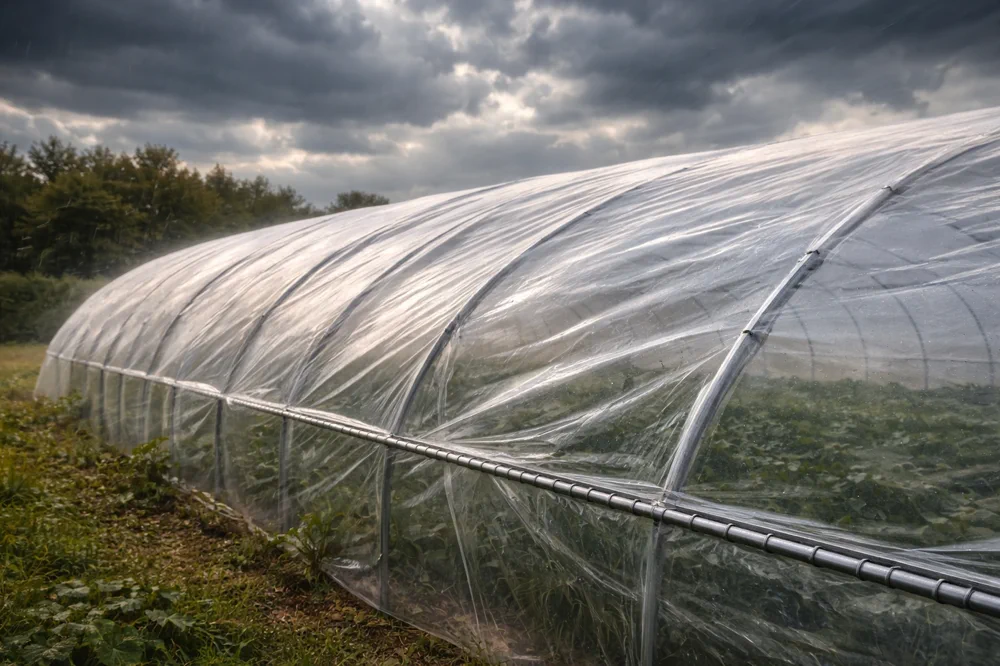
Wind is the #1 enemy of greenhouse film longevity because it creates repeated motion. If the film is loose, it flaps—then it abrades—then it weakens and tears.
- Tension matters: tight film reduces movement and noise.
- Edge security matters: weak fastening points become tear starters.
- Abrasion control matters: rubbing at hardware points shortens lifespan fast.
If you're in a high-wind zone, combine a strong fastening system with careful padding at contact points. That combination often outperforms "thicker film alone."
Hoop House Poly Plastic — greenhouse-grade film for high tunnels (cut to length)
FAQs
How long does hoop house plastic last?
Most greenhouse poly films last about 3–5 years, depending on UV exposure, wind, and how tight the film is installed.
Is 6 mil hoop house plastic strong enough?
Yes for most growers. If you're in extreme wind or handle film often, 8 mil can add tear resistance—but tight installation still matters most.
Should I choose clear or diffused poly film?
Clear maximizes light. Diffused softens intensity and can improve canopy penetration while reducing hot spots—often useful in bright climates or dense crops.
Can I repair small tears in hoop house plastic?
Yes—use greenhouse repair tape on clean, dry film. Round the corners of the tape patch and press firmly to seal.
What installation detail makes the biggest difference?
Keeping the film tight and preventing rubbing at contact points. Lock channel + wiggle wire helps maintain consistent tension and reduces flapping.
Do I need a double layer inflated system?
Not always. Double layer is most valuable in cold climates or heated tunnels because the insulating air gap reduces heat loss at night.
Does poly film stop condensation?
No film fully stops condensation. Anti-condensate formulations can reduce dripping, but airflow and humidity control still matter.
How do I size poly plastic for my hoop house?
Measure the full arc (ground-to-ground over the hoop) and add extra on both sides for fastening. It's safer to size up and trim than come up short.