What Is IRAC Greenhouse Plastic?
IRAC (Infrared Anti-Condensate) greenhouse plastic is engineered to help retain heat inside the greenhouse at night while still allowing strong daylight transmission. Unlike standard clear plastic, IRAC film is formulated to reflect a portion of infrared (radiant) heat back toward plants and the growing area instead of letting it escape.
This makes IRAC greenhouse plastic especially useful for cold climates, winter growing, shoulder-season production (early spring / late fall), and any greenhouse that runs heat overnight.
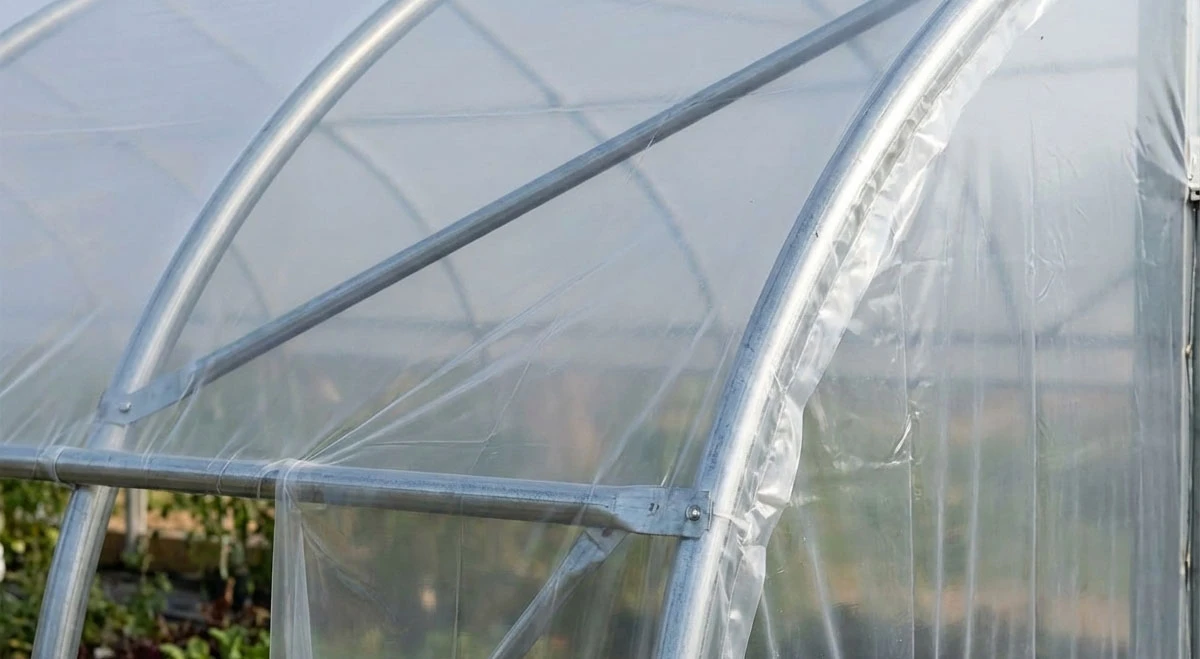
How Does IRAC Greenhouse Plastic Retain Heat?
IRAC greenhouse plastic retains heat by reflecting infrared radiation back into the greenhouse, reducing nighttime heat loss while still allowing sunlight to enter during the day.
IRAC greenhouse plastic helps retain heat by:
- Reflecting infrared radiation
- Reducing overnight temperature drops
- Lowering heating system usage
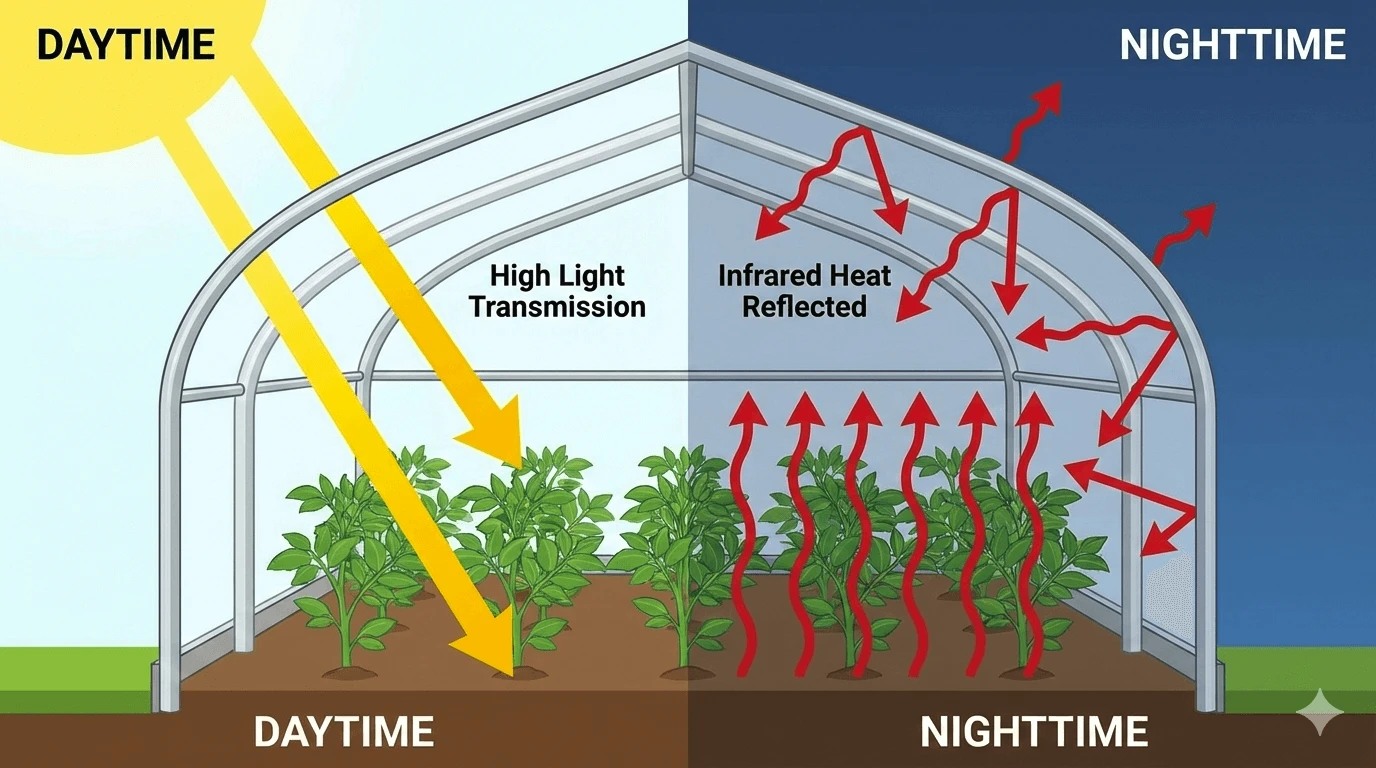
After sunset, soil, benches, and plants release stored heat as infrared energy. Standard greenhouse plastic allows a significant portion of that radiant heat to escape.
IRAC film contains infrared-reflective additives that push more of that energy back into the growing space, which can reduce how quickly temperatures fall overnight.
What Temperature Difference Can You Expect?
In real-world use, many growers report a noticeable improvement in nighttime temperature stability when switching from standard film to IRAC film. The most commonly reported range is roughly 2–8°F warmer at night compared with standard clear plastic, but results vary widely.
Your actual temperature gain depends on factors like greenhouse tightness, wind exposure, heater size, ventilation leaks, and whether you run a double layer system.
What Affects IRAC Performance Most?
If you want the best results from IRAC greenhouse plastic, pay extra attention to these factors:
- Air leaks: gaps around end walls and doors can erase heat gains quickly
- Wind: high wind increases convective heat loss
- Wet surfaces/condensation: moisture can change heat behavior and light
- Double layer inflation: an air layer dramatically improves insulation
- Frame abrasion: rubbing reduces film lifespan and can create weak points
Does IRAC Reduce Heating Costs?
Yes. By slowing heat loss, IRAC plastic can help reduce fuel or electric heating usage, stabilize overnight temperatures, and protect crops during cold snaps.
While IRAC film costs more upfront than clear plastic, many growers recover the difference in one to two heating seasons when heating is a major operating cost.
IRAC vs Clear vs Double Poly: Which Is Better?
IRAC reduces radiant heat loss at night, while a double poly system adds an insulating air layer. Many cold-climate growers use both for best winter performance.
| Feature | IRAC (single layer) | Clear (single layer) | Double layer system |
|---|---|---|---|
| Heat retention (radiant) | High | Low | Medium–High |
| Insulation value (air barrier) | Medium | Low | High |
| Light transmission | High | Very high | Slightly reduced vs single layer |
| Best use | Cold climates / heated houses | Mild climates / max light | Very cold climates / high heat costs |
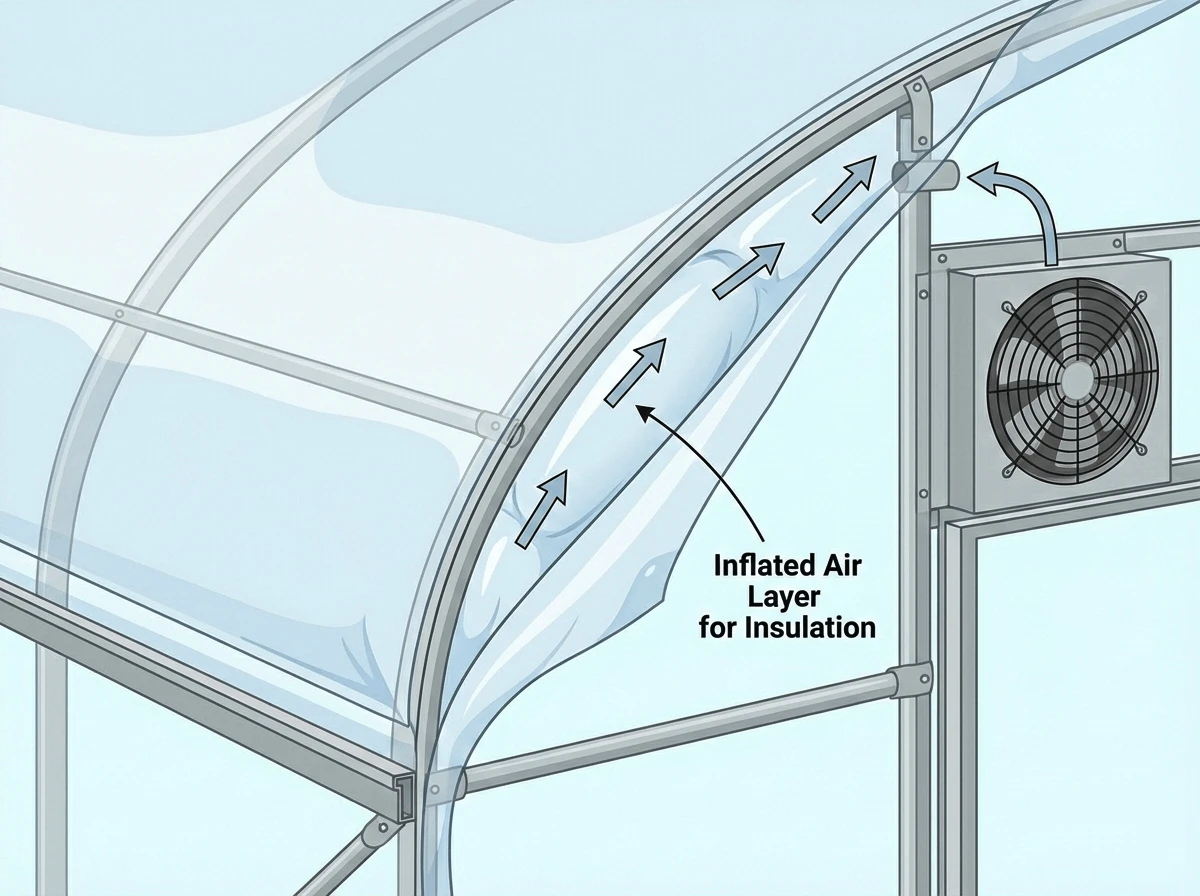
IRAC and "double poly" solve related—but slightly different—problems. IRAC focuses on reducing radiant heat loss. A double layer (two films with an air space) primarily improves insulation by adding an air barrier. Many growers use both for the best winter performance.
Shop IRAC film for cold nights
IRAC greenhouse plastic is designed to reduce nighttime heat loss in cold climates while still letting in strong daylight. If you’re deciding between thermal performance and max light, compare it to our clear film.
- Designed to hold heat on cold nights
- Helps reduce condensation drip (anti-condensation additive)
- Cut-to-length options for your greenhouse size
Who Should Use IRAC Greenhouse Film?
IRAC greenhouse plastic is a strong fit for:
- Northern climates and high-elevation regions
- Growers heating at night (propagation, early starts, winter greens)
- High-value crops where temperature swings reduce quality
- Greenhouses or hoop houses where fuel costs matter
If you only grow during warm months and rarely heat, clear greenhouse plastic may be a better value.
How to Choose Thickness and Size
Choosing the right thickness and dimensions prevents headaches during installation and helps avoid premature tears.
Thickness basics:
- 6 mil: common choice for many hoop houses and greenhouses
- 8 mil: more tear resistance and often longer life in wind/snow regions
Measuring basics (simple method):
- Measure the width from ground-to-ground over the hoop (the full arc)
- Add extra length for fastening on both sides (often 1–2 feet per side, depending on your channel/fastener system)
- Measure the full greenhouse length and add extra for end-wall fastening (commonly 2–4 feet total)
If you're unsure, size up—extra film can be trimmed, but film that's too small can't be stretched safely.
Installation Tips to Get the Most from IRAC Film
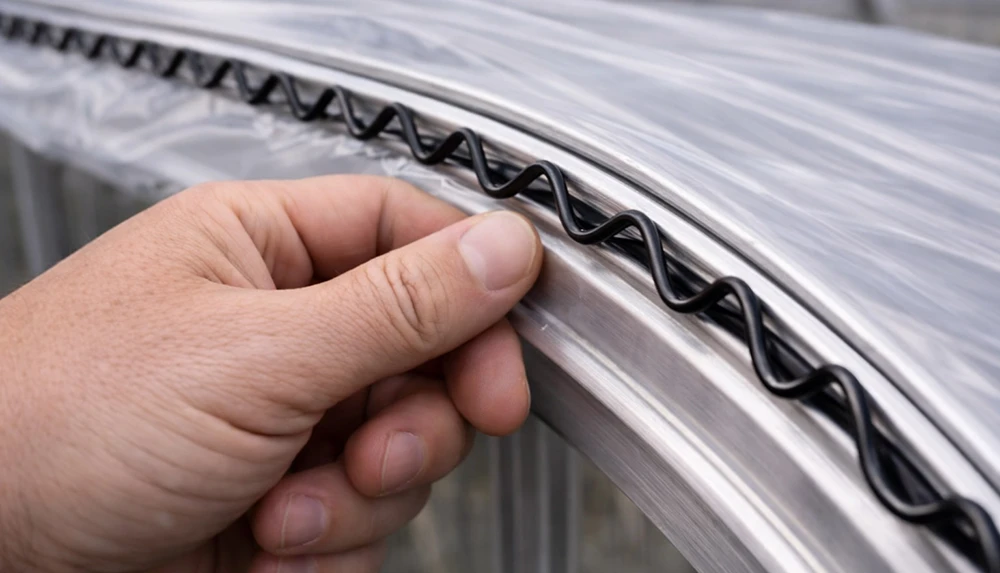
Small installation details can make a big difference in lifespan and performance:
- Install on a warm day so the film stretches evenly
- Keep film tight to reduce flapping and abrasion
- Pad or tape sharp frame edges to prevent rubbing
- Use proper fastening hardware for consistent tension
- Seal common leak points (end walls, doors, vents) to preserve heat gains
Condensation: What IRAC Can and Can't Fix
Condensation is influenced by humidity, temperature swings, airflow, and the temperature of the film surface. IRAC formulations are often paired with anti-condensate properties, but film alone won't eliminate condensation if airflow is poor or humidity remains high.
To reduce condensation:
- Ventilate strategically (even in winter, brief venting can help)
- Improve air circulation with fans
- Avoid large temperature swings when possible
- Keep film clean to maintain light and reduce cold spots
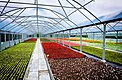
IRAC Greenhouse Plastic 55% Light Diffusion design to hold heat 6 mil thickness
FAQs
What does IRAC mean in greenhouse plastic?
IRAC refers to greenhouse film designed for infrared heat retention and condensation control, helping reduce nighttime heat loss while maintaining daylight transmission.
How does IRAC greenhouse plastic retain heat at night?
At night, greenhouses lose heat as infrared radiation. IRAC film helps reduce radiant heat loss by reflecting more infrared energy back into the growing area.
Is IRAC better than standard clear plastic for cold climates?
If you heat at night or grow in shoulder seasons, IRAC is often a better choice because it improves overnight temperature stability compared with standard clear film.
Should I use IRAC with a double poly (inflated) system?
Many cold-climate growers use both. A double poly setup adds an insulating air layer, and IRAC helps reduce radiant heat loss—together they provide stronger winter performance.
Will IRAC film reduce condensation dripping on plants?
It can help manage dripping when paired with good airflow. Condensation depends on humidity and temperature swings, so ventilation and circulation still matter.
What thickness should I choose for IRAC greenhouse plastic?
Most growers choose 6 mil for a durable all-around cover. In windy or snowy areas, tight installation and proper fastening often matter as much as thickness.
What installation detail makes the biggest difference?
A tight, wrinkle-free install reduces flapping and abrasion. Using lock channel + wiggle wire helps keep film tensioned and can improve longevity.
Is IRAC worth the extra cost?
It’s usually most worth it when heating costs are meaningful or crops are sensitive to temperature swings. If you rarely heat, a standard film may be the better value.