When IRAC Makes Financial Sense
IRAC greenhouse plastic is most valuable when nighttime heat loss is a real cost factor. In some situations, the added performance may not justify the premium.
- You rarely heat at night (or only during brief cold snaps)
- You’re in a mild winter climate with limited overnight heat loss
- The structure is seasonal and removed or uncovered each year
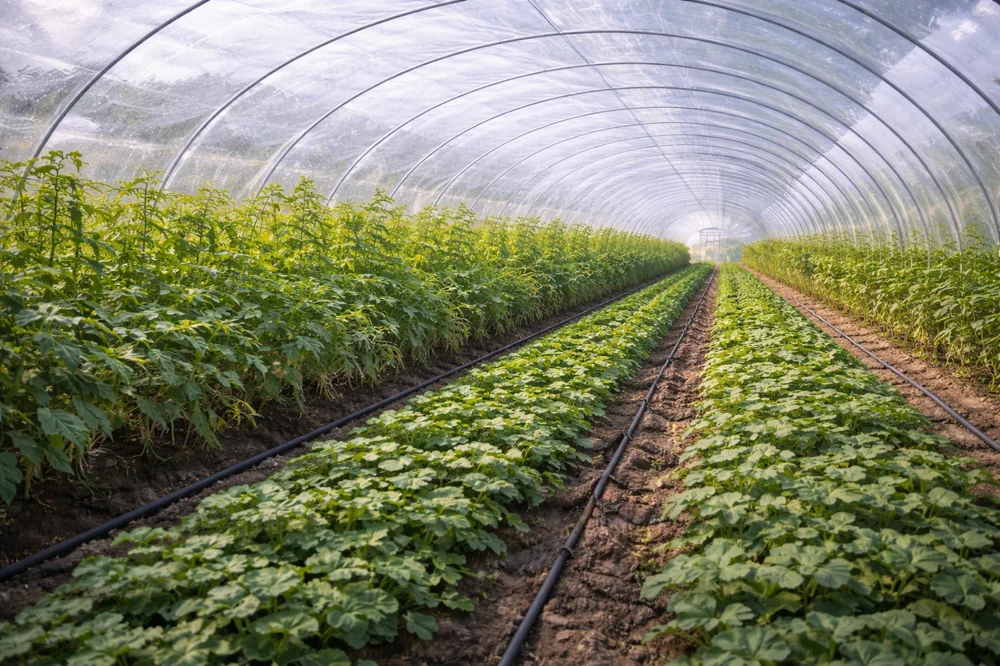
How IRAC Film Reduces Heating Costs
IRAC greenhouse plastic reduces heating costs by reflecting long-wave infrared heat back into the structure at night, lowering the rate of temperature drop and reducing heater runtime—especially on cold, clear nights.
IRAC film helps lower heating costs by:
- Reflecting infrared radiation back toward plants and soil
- Reducing overnight temperature drops
- Lowering heater runtime on cold, clear nights
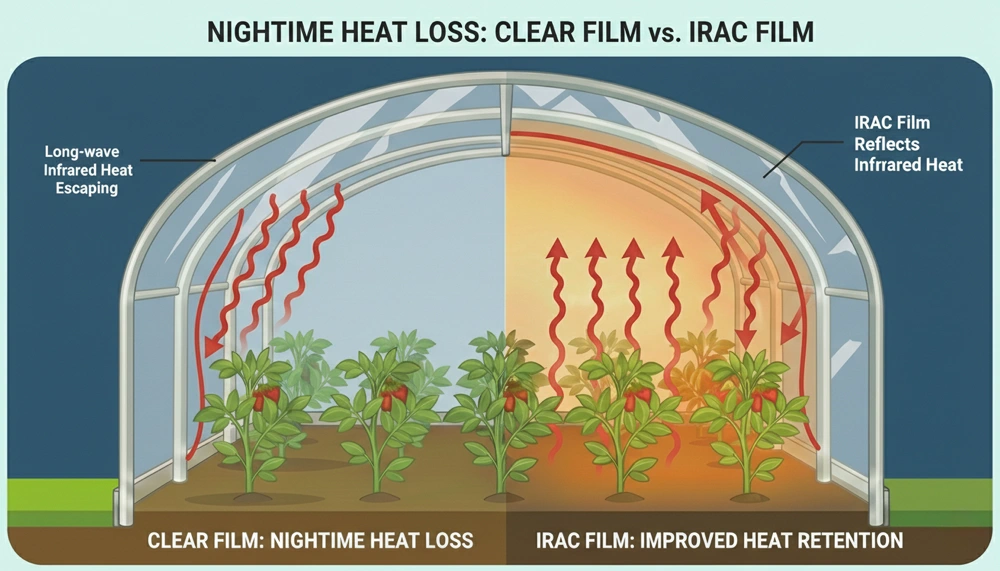
IRAC film is engineered to reflect a portion of long-wave infrared heat back into the structure at night. That can reduce the rate of temperature drop and lower heater runtime—especially on cold, clear nights when radiant losses are highest.
A Simple Payback Way to Think About It
UMass Extension reports measured heating savings of 10–20% for IR film in heated greenhouses, depending on cloud cover. Exact savings depend on your climate, heater type, fuel costs, and how well your greenhouse is sealed.
See the worked payback example.
| Factor | IRAC film | Standard clear film |
|---|---|---|
| Radiant heat retention | Higher | Lower |
| Overnight temperature stability | Better | More swings |
| Heater runtime on cold nights | Often reduced | Often higher |
| Upfront material cost | Higher | Lower |
| Best use case | Cold nights / shoulder seasons | Max light / budget-first |
Tip: If your heating is already minimal (or you run unheated tunnels), IRAC may be less important than durability and light transmission.
Need help choosing the right film?
If you're buying for a commercial operation, we can help you pick thickness, size, and the best setup for your climate.
- Fast recommendations for thickness and sizing
- Commercial orders welcome
- Clear, IRAC, and hoop house options
Installation Details That Protect Performance
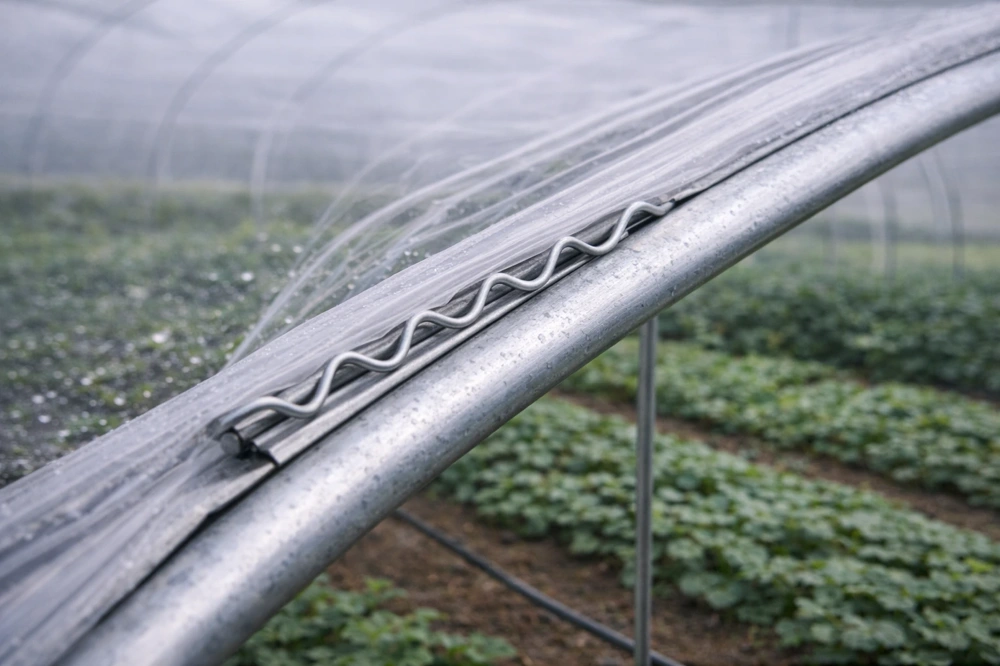
Even the best film can't save energy if warm air leaks out. Use tight fastening and seal common leak points.
- Install on a mild day so film stretches tight and stays tensioned.
- Use lock channel + wiggle wire for even tension and fewer wrinkles.
- Seal gaps at end walls, doors, and vents (these are common "heat leaks").
- Repair rips fast—small openings become big losses in wind.
IRAC vs Double Layer (Inflation)
IRAC and a double-layer inflated system solve related-but different-problems. IRAC reduces radiant heat loss. A double layer improves insulation by adding an air barrier. In cold climates, many growers use both for best winter performance.
Ready to reduce winter heating costs?
Shop IRAC greenhouse plastic for cold nights—or compare to standard clear film if maximum light is your top priority.
- Designed to reduce nighttime heat loss
- Anti-condensation additive options available
- Cut-to-length sizes for your greenhouse
FAQs
Does IRAC film replace a double layer (inflated) setup?
Not always. IRAC reduces radiant heat loss; an inflated double layer improves insulation by adding an air barrier. In very cold climates, many growers use both for best performance.
Will IRAC film reduce daytime light?
IRAC films are designed to retain heat while still transmitting strong daylight. If maximum light transmission is your top concern, compare IRAC to standard clear film for your crop needs.
How much can IRAC reduce my heating bill?
Savings vary by climate, heater type, and fuel costs, plus how well the greenhouse is sealed. Biggest gains usually come from reduced heater runtime on cold, clear nights.
What installation mistakes reduce heat retention?
Loose film, gaps at end walls/doors, and unsealed vents allow warm air to leak out. Tight fastening and careful sealing protect thermal performance.
Can I use IRAC film on hoop houses?
Yes. IRAC can be a good match for hoop houses because they often lose heat quickly at night—especially if edges and doors are not well sealed.