Quick Answer
If you want maximum total light (especially in winter), choose clear. If you want more uniform light with fewer hotspots and softer shadows, choose diffused.
The key difference:
- Clear plastic sends light in straighter paths—great when you're light-limited.
- Diffused plastic scatters light—great when you're managing intense sun and want even canopy coverage.
How Clear vs Diffused Film Changes Light
Both films can be strong greenhouse covers—the difference is distribution. Clear film keeps sunlight more directional. Diffused film scatters incoming light so it arrives at the crop from more angles.
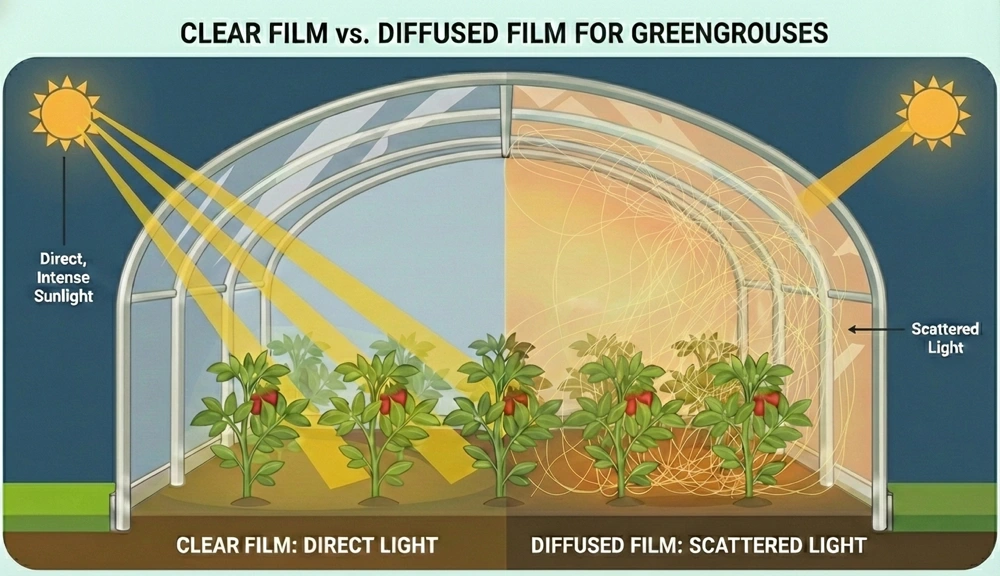
Diffused film does not "create" extra light. It mainly changes where light lands—often improving penetration into dense canopies and reducing hotspots.
What You'll Notice Inside the Greenhouse
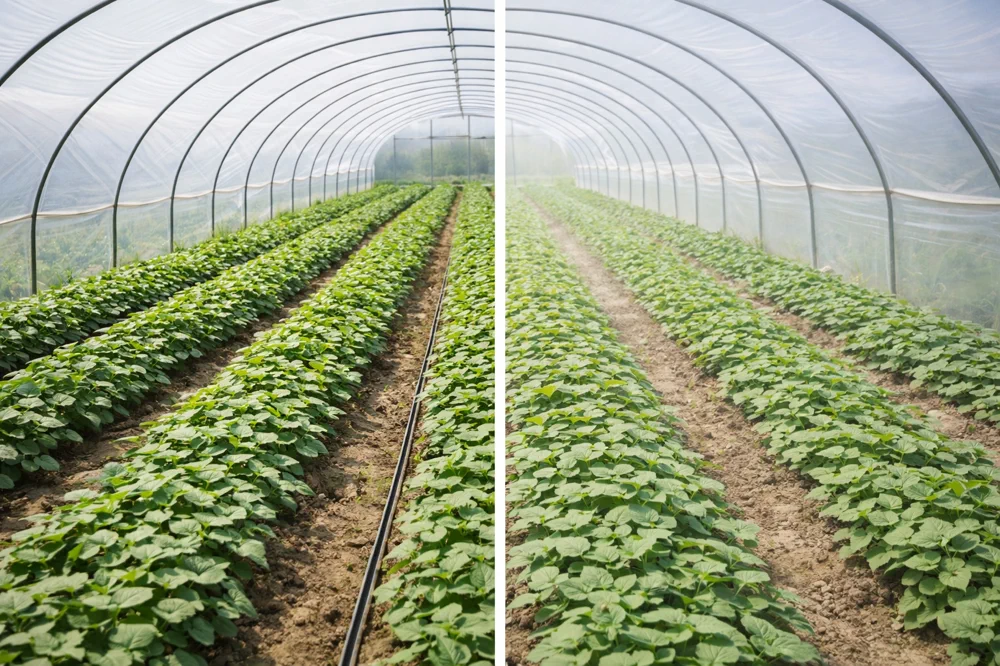
Clear film: brighter beams and stronger contrast
With clear plastic, you'll often see direct sun patches and sharper shadows. That can be ideal when you're trying to push growth during low-light months.
Diffused film: softer light and more uniform growth zones
With diffused plastic, the house typically looks "evenly lit." You'll see fewer hotspots on leaves, and plants in the edges and lower canopy can receive more usable light.
Need help choosing clear vs diffused film?
If you tell us your crop, location, and greenhouse size, we'll recommend the best film type and thickness for your goals.
- Fast recommendations for thickness and sizing
- Commercial orders welcome
- Clear, diffused, and IRAC options
Which Crops Benefit Most from Diffused Film?
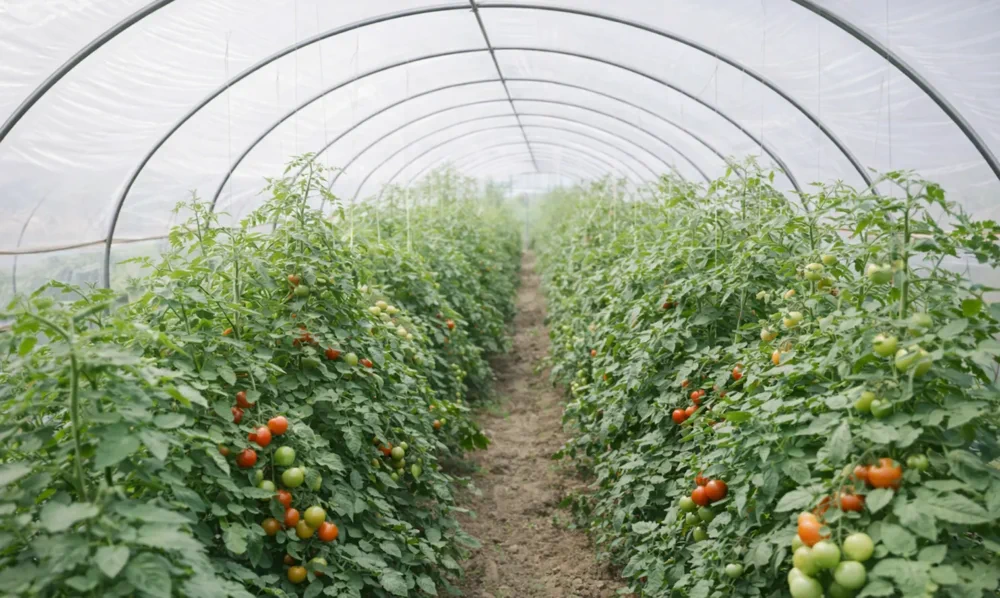
Diffused film tends to shine when the canopy is dense or the site is very bright.
In a Wageningen tomato trial, diffusing glass delivered 8-11% higher tomato yields than standard glass while letting in as much or more light. More light reached the lower canopy. The benefit came from distributing light better, rather than shading the crop.
- Leafy greens & herbs: more uniform light can improve consistency across beds.
- Tomatoes & cucumbers: better penetration can reduce shading and help fruiting zones stay productive.
- Ornamentals: softer light can reduce stress and improve uniformity.
Clear film is often the best choice for winter production, short-day seasons, and regions where total light is the limiting factor.
Decision Table: Clear vs Diffused
| Goal / condition | Choose clear plastic when... | Choose diffused plastic when... |
|---|---|---|
| Light levels | You're fighting low winter light or short days. | You have intense sun and want to spread it through the canopy. |
| Crop habit | You want direct light for shorter crops / seedlings. | You grow tall, dense canopies (tomatoes, cucumbers, leafy greens). |
| Heat gain | You want maximum solar gain during the day. | You can trade a bit of peak intensity for uniformity (less leaf burn). |
| Shadowing | Row-to-row shading isn't a big issue. | You're seeing harsh shadows/hotspots and uneven growth. |
| Seasonality | Winter/shoulder seasons, cold climates. | Spring-summer, bright climates, high-light sites. |
Don't Forget Installation & the Film Package
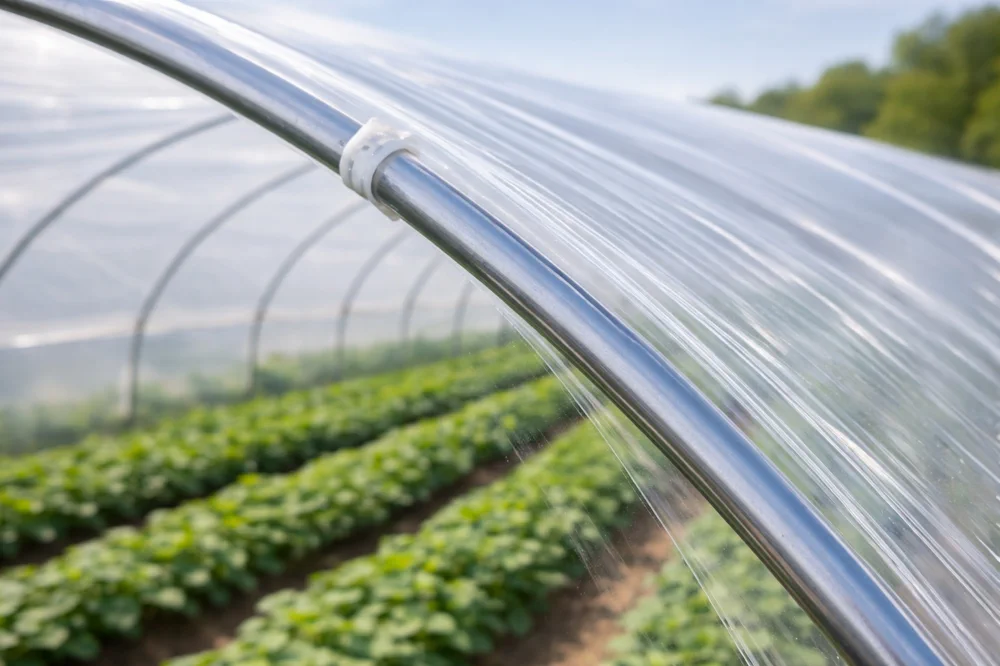
Even the "best" film can underperform if the install is loose or leaky. For any cover type, prioritize:
- Tight film + good fastening (lock channel + wiggle wire, clean edges, no wrinkles)
- Sealing common leak points (end walls, doors, vents)
- Choosing the right package: UV protection, warranty/lifespan, anti-condensation additives, and thickness
Ready to pick your film?
Compare clear and diffused options, then choose widths and cut-to-length sizing that fits your greenhouse.
FAQs
Which film grows plants faster—clear or diffused?
It depends on whether your limiting factor is total light or light distribution. In low-light periods, clear film can help maximize light. In high light, diffused film can improve canopy penetration and uniform growth even if peak intensity is slightly lower.
Does diffused plastic reduce light too much?
Our IRAC film combines about 88% light transmission with 55% diffusion, close to Clear at 90% transmission. Diffused White transmits about 45%, so choose it when you need stronger shading.
Is diffused film worth it for tomatoes and cucumbers?
Often yes—those crops form dense canopies where uniform light can reduce shading, improve fruit set consistency, and limit hotspots. Clear film can still be a strong choice in low-light climates or winter production.
Can I mix clear and diffused on the same house?
Yes. Some growers use diffused on the roof for uniformity and clear on end walls or specific bays to balance light, cost, and availability.
What matters besides clear vs diffused?
UV package, thickness, warranty/lifespan, anti-condensation additives, and how well the film is installed (tight film + good sealing) often make as much difference as the optical choice.