Quick Answer
Larger greenhouse plastic orders can be handled in two main formats: cut-to-length rolls or full master rolls. Cut-to-length rolls are usually easier to stage and install. Master rolls make more sense when the project is large enough to benefit from full-roll coverage, stronger square-foot value, and commercial-scale handling.
For larger commercial orders:
- Choose cut-to-length rolls when simpler handling and less on-site cutting matter most.
- Choose master rolls when scale, coverage, and price per square foot are the bigger priorities.
- Volume discounts up to 20% apply to qualifying cut-to-length orders, not master rolls.
What Matters on a Larger Greenhouse Plastic Order
If you are planning a larger greenhouse plastic order, the question is not only what film to buy. It is also how to order it in the format that makes the most sense for the project.
Some larger jobs are easier when the plastic arrives cut to the lengths you actually need. Others make more sense as full master rolls, especially when the project is large enough that price per square foot, broad coverage, and fewer roll changes start to matter more.
At Greenhouse Plastic, commercial orders are welcome — from larger cut-to-length orders to full master rolls. Qualifying cut-to-length orders may receive volume discounts up to 20%. Master rolls are priced separately as full-roll products and do not receive volume discounts.
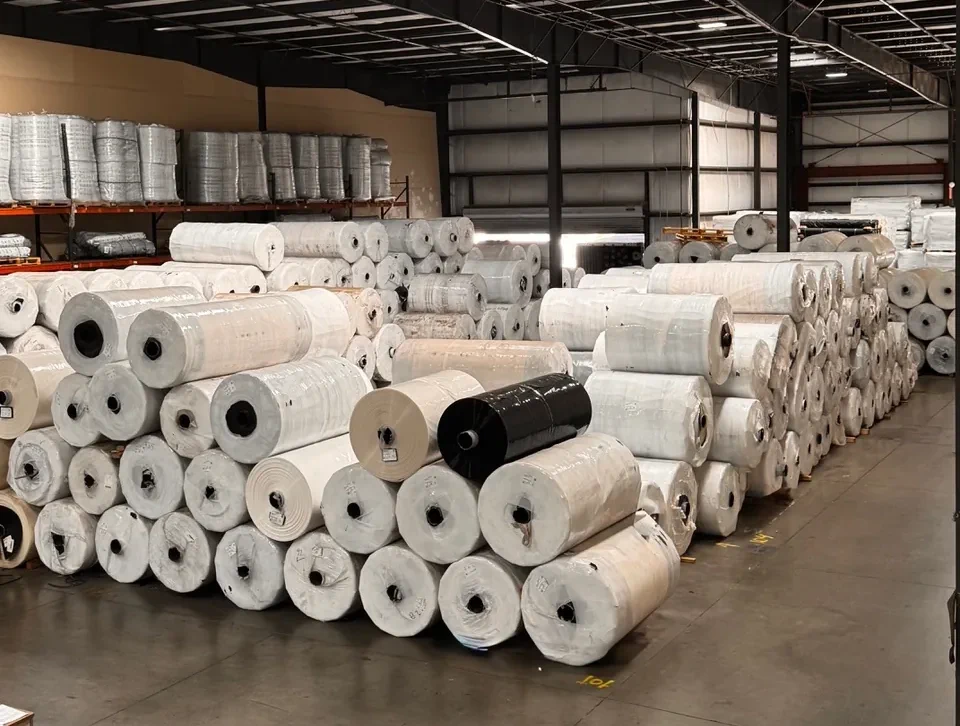
Once an order gets bigger, the decision becomes more practical. You need to think about total coverage, crew workflow, delivery access, unloading, staging, and whether convenience or lowest square-foot cost matters more.
- How much total area are you covering?
- Are you covering one structure or multiple houses?
- Do different structures need different lengths?
- Do you have equipment to unload and move larger rolls?
- Is the priority simpler installation or better square-foot economics?
Those questions usually point toward one of two ordering paths: cut-to-length rolls or master rolls.
When Cut-to-Length Rolls Are the Better Fit
Cut-to-length ordering is often the best choice when the goal is to keep installation straightforward.
This usually makes more sense when the project needs specific roll lengths, different houses need different sizes, or the crew wants less cutting on site. Instead of receiving full commercial rolls and cutting them down before installation, the material arrives closer to the way it will actually be used.
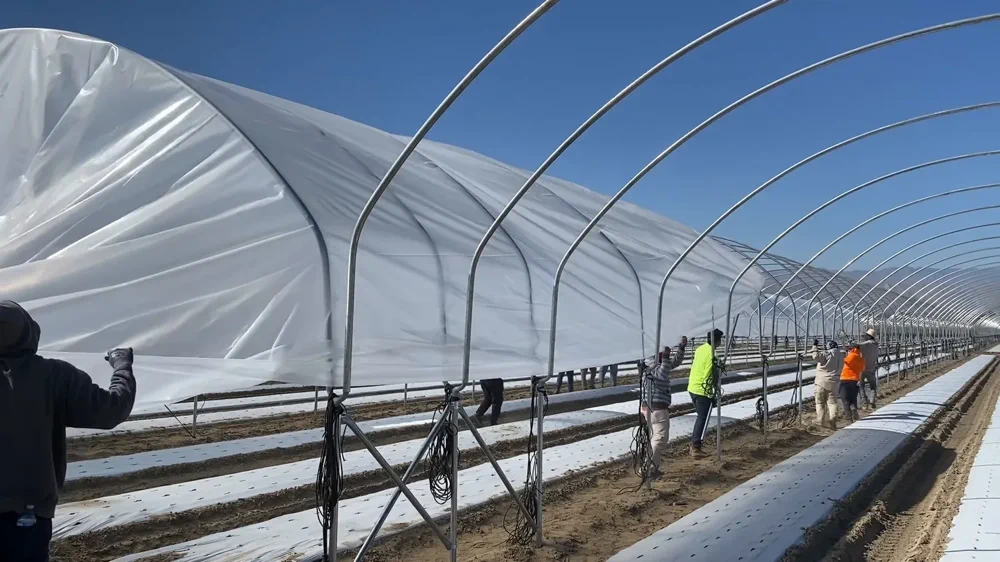
Cut-to-length is about jobsite simplicity
For many commercial growers, the value is not just the material itself. It is the time saved when the crew can move straight into installation instead of cutting and staging full rolls first.
On many larger orders, that convenience is worth more than squeezing out the lowest possible square-foot cost.
When Master Rolls Make More Sense
Master rolls make more sense when the project is large enough that scale becomes the advantage.
This is usually the better fit when you are covering a larger commercial footprint, the job can be planned around fewer larger rolls, and the crew is equipped to handle commercial-size material.
Master rolls are not simply “bigger rolls.” They are the full commercial ordering format. That can be the right move when the job is big enough to justify it, but it also means thinking ahead about how the rolls will be delivered, moved, staged, and installed.
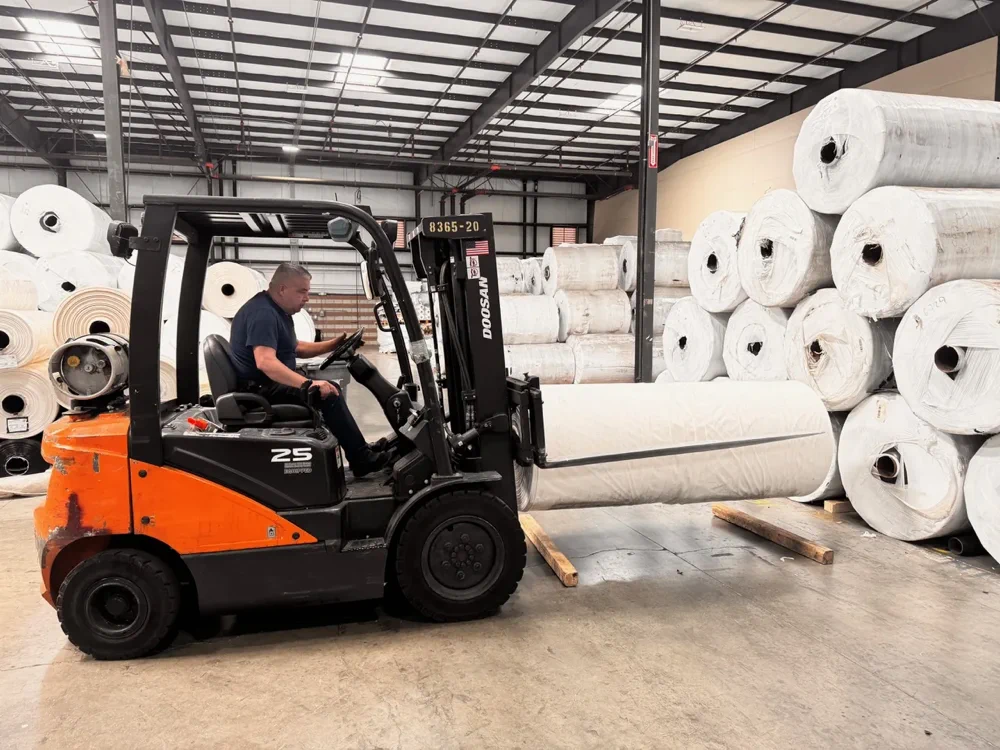
That is why master rolls are often the right solution for larger coverage — but only when the site and crew are ready for them.
How to Choose the Right Ordering Path
The best choice depends on what matters most for the job.
- Start with installation workflow. If the crew needs material in specific working lengths, cut-to-length rolls usually make the job easier.
- Look at project scale. If the job covers a larger commercial footprint, master rolls may offer stronger square-foot value.
- Check handling reality. If the site cannot unload, move, or stage full rolls properly, cut-to-length may be the better practical choice.
- Think beyond product price. Labor, staging, freight, and installation time all affect the real cost of a larger order.
A simple way to think about it: cut-to-length is usually the simpler install path; master rolls are usually the stronger scale path.
Need a Quote for a Larger Order?
If the order is straightforward, you may already know what to buy. If the project is larger, mixed, freight-sensitive, or built around full-roll handling, it can help to talk through the order first.
A larger-order quote can help clarify roll size, quantity, destination, delivery timing, handling needs, and whether cut-to-length rolls or master rolls make more sense.
Planning a Larger Greenhouse Plastic Order?
Commercial orders are welcome. Tell us what you are covering, where it is going, and whether you need cut-to-length rolls, full master rolls, or help choosing the right ordering format.
Request QuoteAlready planning full-roll coverage? See our Hoop House Plastic Master Rolls page.
FAQs
What is the difference between cut-to-length rolls and master rolls?
Cut-to-length rolls are prepared in usable lengths for a specific order. Master rolls are full commercial rolls better suited for larger coverage and projects organized around full-roll handling.
When is cut-to-length the better option?
Cut-to-length is usually the better fit when you want easier handling, less cutting on site, and a smoother installation process.
When is a master roll the better option?
Master rolls make more sense when the project is large enough that price per square foot, fewer large rolls, and full-roll coverage outweigh the convenience of cut-to-length ordering.
Can larger orders qualify for better pricing?
Yes. Qualifying cut-to-length orders may receive volume discounts up to 20%. Master rolls are priced separately as full-roll products and do not receive volume discounts.
Should I request a quote before placing a larger order?
If the order is larger, more complex, or you want help thinking through freight, handling, or ordering format, requesting a quote is a good next step.